

The history of Washington DC monuments reveals more than the achievements of American leaders. Their architecture, construction materials, inscriptions, and locations tell stories about the nation’s development. Even details as simple as the number of columns or the color of marble carry historical significance.
Some monuments took generations to complete, while others faced unexpected construction challenges. Their designs reflect changing ideas about democracy, national unity, and civil rights. Understanding these details offers a deeper appreciation of the landmarks surrounding the National Mall.
At Urban Adventure Quest, we believe the most memorable discoveries often come from looking beyond the obvious. Here are four famous Washington DC monuments and the remarkable stories behind their designs.
1. The Washington Monument: A Tribute That Took Generations to Build
Standing above the National Mall, the Washington Monument honors America’s first president, George Washington. Its simple geometric shape makes it one of the capital’s most recognizable landmarks. However, the original architectural plans looked quite different from the monument we see today.
The Original Design Was Much More Elaborate
The Washington National Monument Society formed in 1833 to establish a national tribute to Washington. Architect Robert Mills proposed a 600-foot Egyptian-style obelisk surrounded by a circular building. His design included space for statues honoring prominent figures from the American Revolution.
Construction began in 1848, but financial difficulties forced workers to stop in 1854. The monument stood unfinished for more than two decades. Political disagreements, limited funding, and the Civil War contributed to the lengthy delay.
Federal funding eventually allowed construction to resume. Engineers simplified the original design and abandoned the surrounding circular structure. Workers completed the monument in 1884, creating what was then the world’s tallest structure.
Why the Washington Monument Changes Color
Look closely at the monument’s exterior, and you’ll notice a change in the marble’s color. This visible difference dates back to the interruption in construction. When work resumed, builders obtained marble from different quarries.
The stones weathered differently over time, making the transition more noticeable. Today, this variation serves as a permanent reminder of the project’s financial and political challenges. What appears to be a minor architectural detail tells an important story about nineteenth-century America.
2. The Lincoln Memorial: A Symbol of National Unity
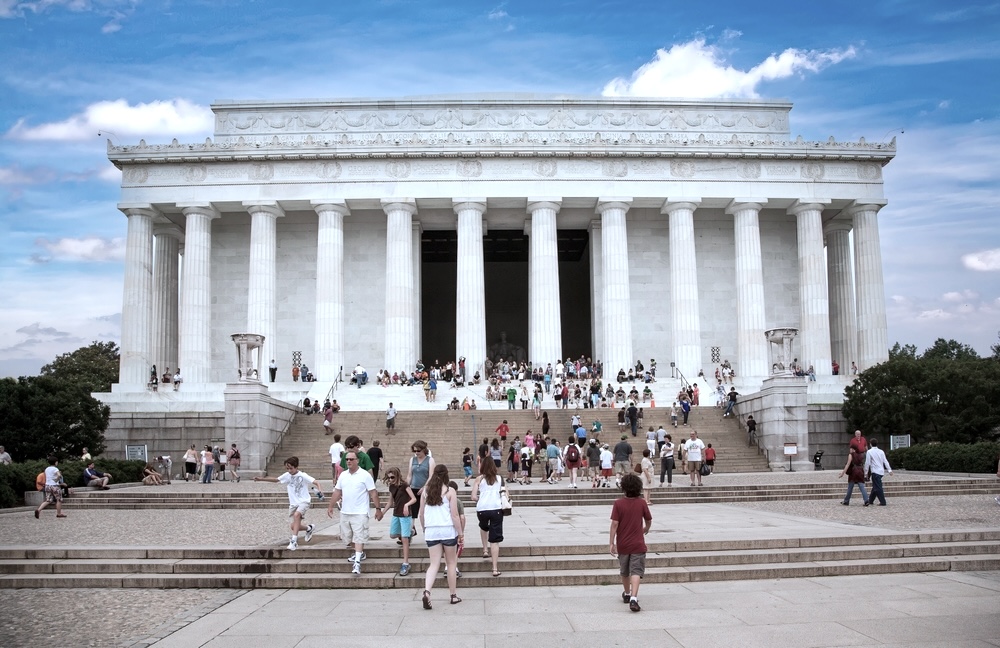
Abraham Lincoln’s seated statue commands attention inside the Lincoln Memorial. Yet the building surrounding him contains some of its most meaningful historical features. Architect Henry Bacon designed the memorial to represent more than the life of America’s sixteenth president.
What the 36 Columns Represent
Bacon drew inspiration from the Parthenon in Athens, Greece. He connected classical Greek architecture with the democratic principles Lincoln sought to preserve. Construction began in 1914, and the memorial was dedicated on May 30, 1922.
The building’s 36 exterior Doric columns represent the number of states in the Union when Lincoln died in 1865. Their arrangement creates an architectural tribute to national unity. The names of those states appear above the columns, providing another historical detail worth noticing.
Inside, sculptor Daniel Chester French’s marble statue sits between inscriptions of two important presidential speeches. The Gettysburg Address and Lincoln’s Second Inaugural Address reflect his commitment to preserving the nation. Together, the sculpture, architecture, and inscriptions communicate themes of sacrifice, freedom, and reconciliation.
How the Memorial Became a Landmark of Civil Rights
The Lincoln Memorial developed additional historical significance during the twentieth century. Its steps became a gathering place for Americans advocating for equality and civil rights. The location connected contemporary struggles with Lincoln’s legacy and the abolition of slavery.
One important moment occurred in 1939 when singer Marian Anderson performed before a large audience outside the memorial. She had been denied permission to perform at Constitution Hall because of racial discrimination. Her performance helped establish the Lincoln Memorial as a prominent setting for civil rights advocacy.
On August 28, 1963, Martin Luther King Jr. delivered his famous “I Have a Dream” speech from the memorial’s steps. The March on Washington for Jobs and Freedom brought national attention to racial injustice. This historic gathering strengthened the memorial’s association with the continuing pursuit of equality.
3. The Jefferson Memorial: American History Told Through Stone
Located beside the Tidal Basin, the Thomas Jefferson Memorial stands apart from the rectangular design of many Washington DC landmarks. Its circular columns and domed roof reflect Jefferson’s appreciation for classical architecture. The building also contains materials selected for their historical significance.
How Construction Materials Represent America’s Growth
Different types of stone throughout the memorial represent different regions of the United States. Vermont marble forms its exterior, while Georgia marble lines the interior walls. These materials symbolize the geographic reach of the original thirteen states.
Other stones reflect the country’s expansion beyond its original boundaries. Tennessee marble appears in the floor, while Indiana limestone forms part of the dome. Each material contributes to a larger historical story.
Jefferson’s bronze statue stands on Minnesota granite, surrounded at its base by Missouri marble. Both states include territory acquired through the Louisiana Purchase of 1803. That acquisition nearly doubled the size of the United States during Jefferson’s presidency.
Why Jefferson’s Original Statue Wasn’t Made of Bronze
The Jefferson Memorial was dedicated on April 13, 1943, the 200th anniversary of Jefferson’s birth. However, the country was fighting World War II at the time. Restrictions on metals prevented the completion of the intended bronze statue.
Visitors initially encountered a plaster figure painted to resemble bronze. The permanent statue replaced it in 1947 after wartime restrictions had ended. Standing 19 feet tall, the bronze figure remains the centerpiece of the memorial today.
The temporary statue connects two distinct periods of American history. A monument honoring an eighteenth-century founding father was shaped by the demands of a twentieth-century war. Its construction reminds visitors how national events can influence even the most carefully planned architectural projects.
The Contradictions Behind Jefferson’s Legacy
Jefferson’s contributions to American democracy cannot be separated from the contradictions of his personal life. He helped establish principles of individual liberty while enslaving hundreds of people during his lifetime. This contrast remains an important part of understanding his legacy.
The memorial celebrates Jefferson’s influence on the nation’s founding and development. Its inscriptions also offer an opportunity to reflect on the distance between America’s founding ideals and historical realities. Understanding both provides a more complete perspective on the landmark’s significance.
4. The Martin Luther King Jr. Memorial: A Message Carved in Stone
The Martin Luther King Jr. Memorial offers a different approach to commemorating an influential American leader. Rather than placing a statue on a traditional pedestal, its designers created an experience built around movement and symbolism. Visitors encounter a physical interpretation of King’s message before reaching his sculpture.
The Meaning Behind the Mountain of Despair
Two large sections of granite form the entrance to the memorial. Known as the Mountain of Despair, they represent the obstacles and struggles addressed throughout King’s life. Visitors pass between these stone formations before reaching the central sculpture.
A separate piece of granite appears to have been removed from the mountain. This formation, called the Stone of Hope, contains a carving of King. The design draws inspiration from his 1963 speech at the Lincoln Memorial.
Instead of presenting hope as an abstract concept, the memorial expresses it through the relationship between these massive stones. Walking through the entrance allows visitors to experience that relationship themselves. The arrangement gives physical form to a message that continues to resonate across generations.
Why the Memorial’s Location Matters
The memorial occupies a meaningful position along the Tidal Basin between the Lincoln and Jefferson memorials. Both presidents influenced the historical principles King referenced in his civil rights advocacy. Their memorials create a connection between the nation’s founding, the abolition of slavery, and the pursuit of racial equality.
An inscription wall surrounds portions of the site. Its quotations come from King’s speeches and writings across different periods of his life. They address justice, peace, democracy, and the importance of nonviolent action.
The memorial opened in 2011, adding another perspective to Washington’s monumental landscape. Unlike the presidents honored at the other three landmarks, King exercised his influence through citizen leadership and social activism. His memorial recognizes the role individuals and communities play in shaping American history.
Understanding the Architecture of Washington DC Monuments
These four landmarks demonstrate how architecture can communicate ideas without words. Their shapes, materials, dimensions, and locations contribute to their historical meaning. Looking beyond their size and appearance reveals details that connect different periods of American history.
The Washington Monument draws from ancient Egyptian architecture. The Lincoln Memorial reflects classical Greek design, while the Jefferson Memorial incorporates Roman architectural influences. The Martin Luther King Jr. Memorial uses a more contemporary approach, expressing its message through sculpture and the surrounding landscape.
Despite their differences, each landmark connects a historical figure with broader national themes. Their designers used architecture to represent ideas about leadership, democracy, independence, unity, and equality. Together, these monuments offer a physical record of America’s evolving identity.
What to Look for When Visiting the National Mall
Knowing the history behind Washington DC’s landmarks changes the way you experience them. Rather than moving from one famous attraction to another, give yourself time to examine their individual features. Some of the most meaningful details are visible without entering a building.
- Observe the Washington Monument’s marble: Find the change in color that reveals the interruption in construction.
- Examine the Lincoln Memorial’s exterior: Look for the state names above its columns and consider their connection to the Union.
- Compare the Jefferson Memorial’s materials: Notice the different colors and textures of its stonework.
- Walk through the Martin Luther King Jr. Memorial: Observe how the separated granite formations communicate the monument’s central message.
- Read the inscriptions: Consider the historical events and ideas that inspired the words chosen for each memorial.
Allow plenty of time between landmarks, especially when visiting the Tidal Basin. Comfortable shoes, drinking water, and occasional breaks can make your outing more enjoyable. The National Park Service’s National Mall and Memorial Parks website provides additional historical information, monument details, and resources for planning your visit.
See the Nation’s Capital Through a Historical Lens
Washington DC offers countless opportunities to connect American history with the places where it unfolded. Our Washington DC scavenger hunt tour encourages you to notice historical details through smartphone-guided clues and challenges. From famous landmarks to overlooked architectural features, the experience turns the capital’s history into an opportunity for shared discovery.
Continue Your Journey Through American History
Washington DC tells one chapter of the American story, but other cities reveal its earliest beginnings. Follow the history of American independence through our Philadelphia scavenger hunt, or discover the city’s Revolutionary War heritage with our Boston Freedom Trail scavenger hunt. Each destination offers a different perspective on the events and people that shaped the nation.
Historic streets, preserved buildings, and public monuments offer opportunities to connect with the past. Whether you’re planning an educational family outing or a weekend getaway, history can become part of your next adventure. Browse our scavenger hunt locations to find a destination that interests you.


